How to Honour a Loved One During the Holidays · Memorae
How to Honour a Loved One During the Holidays
Gentle ways to honour a loved one during the holidays: simple rituals, words to say at the table, ideas for children and family far away.
By Terry · 19 October 2026 · 6 min read
If someone you love has died, the holidays can feel like a room with the lights on and one chair empty. Everyone else seems to be celebrating, and you're wondering how to get through it without pretending they were never here.
This guide is about how to honour a loved one during the holidays in ways that feel true to them and kind to you. You'll find small rituals you can start this week, words you can actually say at the table, ideas for children, and ways to include family who live far away.
There's no right way to do this. Take what helps and leave the rest.
Start with what you can manage this year
Before planning anything, be honest about how much you have in you. The first holiday season after a loss is often the hardest, but a later year can catch you off guard too.
Decide what stays and what can rest. You don't have to host, cook the full menu or attend every party. Pick the one or two traditions that matter most and let the others go for a year.
Tell people early. A short message to family, such as "I'd love to be there, but I may need to leave early", saves you from explaining in the moment.
Plan a quiet hour. Big days are long. Knowing you can step outside, take a walk or sit somewhere quiet makes the rest easier to face.
Expect mixed feelings. You might laugh at a memory and cry five minutes later. Both are part of loving someone.
For many families, the season of remembering starts early. All Souls' Day falls on 2 November, and in Catholic and Anglican churches in Nigeria, the UK and the US it's a day set aside to pray for and name the dead. If that is part of your faith, it can be a gentle first step: a Mass or service, a visit to the grave, or simply writing their name in the parish book of remembrance.
Small rituals that keep them close
These work whether the loss was months ago or many years ago. Choose one, not all.
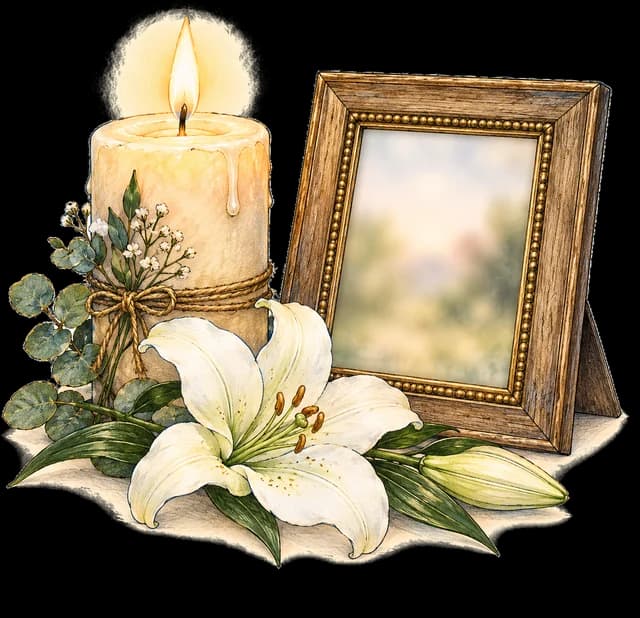
Light a candle for them
Light it at the start of the meal, during grace or prayers, or late at night when the house is quiet. Saying their name out loud as you light it matters more than the candle itself.
Keep a place for them
Some families set an empty place at the table. Others put a photo, their reading glasses or their favourite cup where they used to sit. If an empty chair feels too heavy, put the photo on a side table instead.
Cook their dish
Make the jollof rice they insisted was the best in the family, their Christmas cake, or the stew nobody else could get right. Get it slightly wrong. Laugh about it. That's part of the tribute.
Play their music
Put on the songs they played every December, the hymn they always sang loudest, or the old highlife record from their younger days. Music brings people back into the room in a way words often can't.
Give in their name
Give to a cause they cared about, sponsor a child's school fees for a term, feed people at church, or help a neighbour they would have helped. Tell the family where the gift went and why.
Wear something of theirs
A scarf, a wristwatch, a gele or a tie. Small, private and close, and something you can carry with you all day.
What to say when the family gathers
Often the hardest part isn't the day itself. It's the silence where their name should be. Most families are waiting for someone to go first. These lines are written for you to use, change or make your own.
A short toast or grace
"Before we eat, let's remember Mum. She'd want us all here, arguing about the rice. We miss you."
"This is the first Christmas without Dad. We're grateful for every one we had with him."
"To Grandma, who taught every one of us to cook, pray and forgive. You're at this table in all of us."
Inviting others to share
"I'd love to hear a story about him that I don't know yet."
"What's one thing she used to say that still makes you smile?"
"Can we go round the table and each share a favourite memory?"
For someone who's grieving
If you're supporting a friend or relative, simple words are best.
"I've been thinking about your dad today. I miss him too."
"You don't have to be okay this Christmas. I'm here."
"I remember how he used to [their habit]. That always made me laugh."
Avoid "they're in a better place" or "at least" sentences unless you know the person finds comfort in them. Naming the person is usually the kindest thing you can do.
Including children
Children often feel the loss more than adults realise, and they notice when a name stops being said.
Give them a job. Let them light the candle (with help), choose a decoration that reminds them of the person, or pick the song.
Use plain words. Gentle honesty, such as "Grandpa died, and we're thinking about him today", is easier for a child than vague phrases.
Make something together. A drawing for the fridge, a card "to Grandma", or a handprint ornament. Many children like having something they can hold.
Let them ask questions. Younger children may ask the same thing again and again. That's how they make sense of it.
When the family is spread across the world
For many Nigerian families, Christmas means homecoming: everyone travels back to the village or to Lagos, and the person who always opened the gate is no longer there. For others, it means the opposite. Half the family is in London, Houston or Toronto, and grief has to cross time zones.
A few ideas that help:
Agree a shared moment. Pick a time that works across countries, such as 7pm Lagos, 6pm London, 1pm New York, when everyone lights a candle or says a prayer, wherever they are.
Hold a short video call. Keep it to twenty minutes: one prayer, one memory each, and a song. Short is easier for everyone.
Gather the stories in one place. Ask cousins, aunties, old friends and colleagues to send one photo and one memory each. You may hear stories you never knew, and you'll have them to go back to.
Visit the grave for those who can't. If you're home, send a photo or a short video of the grave cleaned and decorated for the season.
If you'd like a gentle way to keep everyone's photos, messages and stories together in one page the family can open from anywhere, that's what a remembrance Memorae is for.
Looking after yourself
Honouring someone you love doesn't mean carrying the whole season on your own shoulders.
Rest when you can. Grief is tiring, and the holidays add late nights, travel and noise.
Spend time with people who say their name. Lean on the friends and relatives who let you talk about them.
Start one new tradition. Families change after a loss. A new walk on Boxing Day, a new dish or a new place to gather can sit alongside the old ones.
Ask for help. If the weight feels too much, talk to someone you trust, your faith leader, or a bereavement service such as Cruse Bereavement Support in the UK. Reaching out isn't a sign you're not coping. It's part of coping.
A gentle closing thought
You don't have to make this holiday perfect for it to mean something. A lit candle, a story told at the table, their favourite song playing quietly in the kitchen: these small things say, "You were here, and you still matter to us."
Remembering them is not the opposite of celebrating. For many families, it becomes part of how they celebrate from now on.
Questions people ask
How do you honour a loved one who has died at Christmas?
Keep it small and personal. Light a candle and say their name, cook a dish they loved, play their music or give to a cause they cared about. One meaningful ritual is often better than trying to do everything.
Is it okay to still celebrate the holidays after a loss?
Yes. Celebrating doesn't mean you've forgotten them or stopped grieving. Many families find that including the person, through a toast, a story or a photo, makes it feel possible to enjoy the day again.
What can I say to someone grieving during the holidays?
Keep it simple and name the person: "I've been thinking about your mum today. I miss her too." Let them know they don't have to be okay, and avoid phrases that try to fix the grief.
How can family abroad take part in remembering someone?
Agree a shared moment across time zones to light a candle or pray together, hold a short video call, and gather photos and memories from everyone into one place the whole family can open.
How do I include young children in remembering a grandparent?
Give them a small job, like choosing a decoration or the song, and use plain, gentle words about the death. Making something together, such as a drawing or card, gives them a way to show what they feel.
What is All Souls' Day?
All Souls' Day, on 2 November, is a day in the Catholic and Anglican calendars for praying for and remembering those who have died. Many families visit graves, attend a service or add names to a book of remembrance.